

Unleash the Fun: Nine Dynamic Indoor Adventures to Spark Joy and Learning
Being cooped up inside, especially with the ever-present demands of modern life, can sometimes feel like a bit of a drag, couldn’t it? We’ve all been there, watching the rain lash against the windows or the snow pile up outside, wondering how on earth we’re going to keep the energy contained and the boredom at bay. But here’s the thing: it doesn’t have to be a grey, listless affair. With just a dash of creativity and a willingness to embrace a little delightful chaos, you can absolutely transform your home into a vibrant hub of fun, discovery, and unexpected learning. It’s not just about passing the time; it’s about making memories, fostering crucial skills, and strengthening those invaluable family bonds.
Think about it for a moment. Our homes, those familiar spaces we navigate daily, hold immense potential. They’re not just walls and furniture; they’re canvases waiting for imagination, stages for grand adventures, and laboratories for budding scientists. When the outside world calls for us to stay in, that’s our cue to turn inward, to unlock the magic within our own four walls. What if every rainy afternoon or chilly evening became an exciting opportunity instead of a challenge? That’s exactly the mindset we’re aiming for.
Now, let’s dive into some concrete, actionable ideas. These aren’t just time-fillers; they’re gateways to engagement, collaboration, and genuinely joyful moments. We’re going to explore nine fantastic activities that promise to keep your kids not just occupied, but genuinely engaged, entertained, and perhaps even a little enlightened.
1. The Grand Indoor Obstacle Course: An Epic Adventure Awaits
Who says you need a playground to burn off some serious energy? Your living room, that often-too-tidy space, holds the secret to an exhilarating adventure zone. Imagine it: a sprawling landscape of challenges, right there between the sofa and the coffee table. Creating an indoor obstacle course is more than just a way to get the wiggles out; it’s a fantastic exercise in imaginative play, problem-solving, and developing crucial physical coordination.
Designing Your Adventure Zone
Start by surveying your space. What everyday items can you repurpose? Pillows become precarious stepping stones across a ‘lava’ floor (the carpet, naturally). Chairs, when turned on their sides, can form the perfect tunnel for crawling through, or maybe even a tricky hurdle to jump over. Drape a blanket between two chairs, and suddenly you’ve got a shadowy cave to navigate. A piece of string stretched low between furniture transforms into a laser grid that must be carefully stepped over, or a high one for kids to limbo under. You can use laundry baskets for ‘target practice’ where they toss soft toys, or even a rolled-up yoga mat as a balance beam, testing their steadiness.
Don’t be afraid to get creative with the ‘rules’ too. Maybe they have to hop on one foot through a certain section, or army crawl under another. Perhaps a specific zone requires them to retrieve a ‘sacred artifact’ (a toy hidden under a cushion) before proceeding. You’ll find that kids often have the best ideas for new obstacles, so involve them in the design process from the get-go. This collaboration makes them feel invested and enhances their sense of ownership over the activity.
The Benefits Beyond the Bounces
Beyond the sheer physical exhilaration, an obstacle course offers a treasure trove of developmental benefits. Kids are honing their gross motor skills, improving balance, agility, and spatial awareness as they navigate tight squeezes and lofty jumps. They’re also engaging their minds in real-time problem-solving: ‘How do I get over this without touching the floor?’ or ‘Which path is the fastest?’ It encourages planning, sequencing, and even a bit of risk assessment, all within a safe, controlled environment. Plus, it’s a brilliant way to build confidence as they conquer each challenge, sometimes even competing against a clock you set, which adds another layer of excitement. Remember, safety first though! Clear away anything fragile, ensure soft landings where needed, and supervise the more ambitious maneuvers. My own kids, bless their hearts, once tried to turn our entire hallway into a series of jumps using kitchen towels, which led to a magnificent, albeit brief, slide-and-tumble challenge. It was chaos, but glorious, memorable chaos.
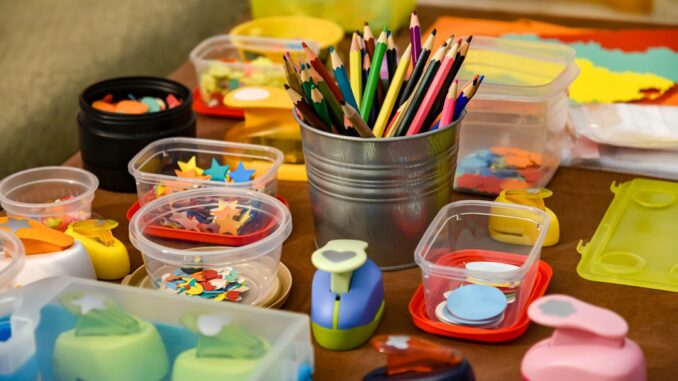
2. The Mighty DIY Craft Station: Unleashing Inner Artists
There’s something incredibly satisfying about getting your hands dirty with glue and glitter, isn’t there? A dedicated craft station isn’t just about making pretty things; it’s a gateway to boundless creativity, a safe space for self-expression, and a fantastic workout for fine motor skills. It’s where imagination truly takes tangible form.
Setting the Scene for Creation
Designate a spot – maybe the kitchen table covered with an old tablecloth, or a corner of the playroom. Then, gather your arsenal of creative tools. Beyond the obvious paper, markers, crayons, and glue sticks, think about what you can forage from around the house. Recycled materials are golden here: cardboard boxes of all sizes, toilet paper rolls, egg cartons, plastic bottles, old magazines, fabric scraps, even bottle caps. Think about things like pipe cleaners, googly eyes, cotton balls, popsicle sticks, and yarn for added texture and dimension. Scissors, of course, are essential, but ensure they’re age-appropriate and safe.
Once everything is laid out, challenge your kids. Instead of saying ‘draw a picture,’ try ‘Can you build a robot that can fly to the moon using only cardboard and tin foil?’ or ‘Let’s see if we can create a magnificent beast using only things from the recycling bin!’ Perhaps they could paint a family portrait using only their fingers, exploring different textures and techniques. The beauty of a craft station lies in the process, not just the pristine final product. It’s about the exploration, the experimentation, the trial and error that leads to something unique. Sometimes the most beautiful creations are those perfectly imperfect ones, wouldn’t you agree?
Cultivating Skills with Every Snip and Stick
Crafting is a powerhouse of skill development. Fine motor skills get a serious workout as little fingers learn to cut, glue, fold, and manipulate small objects. This precision is vital for handwriting and other intricate tasks later on. Creativity blossoms as kids envision something in their mind’s eye and then figure out how to bring it to life with the materials at hand. They’re problem-solving when a piece doesn’t quite fit, or when they need to figure out how to make their robot’s arm articulate. It also teaches patience and perseverance, especially when a project takes longer than expected or requires a few restarts. And let’s not forget the sheer joy and boost to self-esteem when they proudly present their masterpiece, however abstract or unconventional it might be. I remember my nephew once made a ‘superhero cape’ out of an old tea towel and some masking tape, which he wore for days. It wasn’t fancy, but it was his, and that’s what truly mattered.
3. Incredible Indoor Science Experiments: Little Scientists at Work
Who knew your kitchen pantry held the keys to fascinating scientific discoveries? Science isn’t just for laboratories with expensive equipment; it’s about curiosity, observation, and understanding the world around us. Simple household items can become the building blocks for captivating experiments that spark wonder and introduce fundamental scientific concepts in the most fun way imaginable.
Unlocking Scientific Wonders with Everyday Items
Let’s move beyond just the classic baking soda and vinegar volcano – though that’s always a winner, isn’t it? To make an even more impressive eruption, try adding a few drops of dish soap and some food coloring to the vinegar. The soap creates more foam, making the ‘lava’ flow even more dramatically! But there’s a whole universe of experiments awaiting. You can explore density by layering different liquids (like honey, dish soap, water, and oil) in a clear glass to create a ‘rainbow in a jar.’ Talk about why some float and others sink. For a lesson in capillary action, place celery stalks or white flowers in colored water and watch as the petals or leaves slowly change hue over a few hours or a day. You’re demonstrating how plants ‘drink’ water.
Ever tried making slime? With just glue, baking soda, and contact lens solution, you can create a gooey, stretchy, tactile substance that introduces concepts of polymers and chemical reactions. Or how about a simple ‘rain cloud in a jar’? Fill a jar with water, top it with shaving cream, and then drip colored water onto the ‘cloud’ to watch it ‘rain’ down. These activities aren’t just about the ‘wow’ factor; they’re springboards for discussion, encouraging kids to ask ‘why’ and ‘how.’
The Power of Inquiry and Observation
These experiments are more than just magic tricks; they’re practical lessons in the scientific method. Kids learn to observe carefully, to form hypotheses (‘What do you think will happen if we add more baking soda?’), and to draw conclusions. They’re developing critical thinking skills as they try to understand cause and effect. They’re also building vocabulary as they learn terms like ‘reaction,’ ‘density,’ ‘absorb,’ and ‘hypothesis.’ Safety is paramount, of course, so always supervise, especially when using ingredients that shouldn’t be ingested, and make sure to explain why certain things are handled with care. The goal here is to ignite a lifelong curiosity, to show them that science isn’t some abstract, difficult subject, but rather a vibrant, living force that explains so much of what they encounter every single day. Who knows, you might just be nurturing a future Nobel laureate in your very own kitchen!
4. Cozy Indoor Camping: Adventures Under a Blanket Sky
There’s an undeniable allure to camping, that sense of adventure and closeness, isn’t there? But you don’t need a national park or even a backyard to experience that magic. Pitching a ‘tent’ in your living room or crafting an epic fort out of blankets and pillows can transport your family to a world of imagination and shared warmth. It’s a fantastic way to foster creativity, create a snug haven, and forge unforgettable bonding experiences.
Crafting Your Cozy Retreat
First, decide on your structure. You can go classic with a store-bought pop-up tent if you have one, or embrace the DIY spirit with a magnificent blanket fort. Drape sheets and blankets over chairs, sofa backs, and even clothes drying racks. Use clothespins, binder clips, or even heavy books to secure them. Make sure there’s enough space inside for everyone to comfortably sit or lie down. Once the structure is up, it’s time to make it cozy. Bring in sleeping bags, extra pillows, and soft blankets to line the floor. String up some fairy lights inside for a magical glow, or use a flashlight to cast playful shadows. A portable speaker for quiet music or nature sounds can add to the ambiance. And don’t forget the snacks! An indoor picnic, perhaps with sandwiches, fruit, and popcorn, is an absolute must.
Adventures within the Fort Walls
Once you’re nestled inside your temporary home, the real fun begins. Share ghost stories, or better yet, make up your own collaborative tales where each person adds a sentence or two. Play board games or card games by flashlight, which adds an extra layer of challenge and excitement. Break out some books and have a reading marathon, each person taking turns to read aloud. Shadow puppets against the blanket walls are always a hit, sparking giggles and creative movement. You could even pretend you’re on an expedition to a faraway land, drawing maps and planning your ‘journey.’ This kind of immersive play stimulates imagination like nothing else. It also creates a sense of intimacy and closeness, as you’re all literally ‘in it together,’ sharing a unique space and experience. My kids, when they were younger, would build a fort so elaborate it swallowed half our living room, and we’d spend hours in there, emerging only for bathroom breaks and to declare it ‘the best day ever.’ Those are the moments you cherish.
5. Culinary Adventures: Cooking Up Fun Together
The kitchen, often seen as a parent’s domain, is actually one of the richest learning environments in the home. Involving your kids in meal preparation or baking isn’t just about getting dinner on the table; it’s a brilliant way to teach a whole host of life skills, foster independence, and create delicious memories. Plus, when kids help make it, they’re often more willing to eat it, aren’t they?
From Prep to Plate: Age-Appropriate Tasks
Start by picking a recipe that’s relatively simple and has plenty of hands-on steps. Think about baking cookies, making pizzas from scratch, or preparing a colorful fruit salad. For younger children (toddlers and preschoolers), tasks like washing vegetables, tearing lettuce, stirring ingredients in a bowl, mashing soft foods (like bananas for bread), or decorating cookies with sprinkles are perfect. They’re developing fine motor skills and learning to follow simple instructions. As they grow, school-aged children can take on more complex roles: measuring ingredients precisely (a fantastic practical math lesson!), cracking eggs, kneading dough, cutting softer ingredients with child-safe knives, and carefully pouring liquids. You’re teaching them about fractions, sequences, and cause-and-effect in a very tangible way.
Pre-teens can often manage entire recipes with some supervision, reading instructions, setting timers, and even experimenting with flavors. This builds independence, problem-solving skills, and a deeper understanding of nutrition. Emphasize kitchen safety at every step: how to use utensils properly, washing hands frequently, and understanding heat. My own eldest, now a teenager, often whips up her own dinner, a skill she developed from years of ‘helping’ (and occasionally making monumental messes) in the kitchen. It’s immensely satisfying to see.
The Recipe for Life Skills
Beyond the yummy outcomes, cooking together is a masterclass in various disciplines. It inherently teaches math through measuring and counting, reading comprehension as they follow recipes, and science as they observe ingredients change state. It instills patience (waiting for dough to rise!) and teamwork if multiple kids are involved. They learn about different cultures through food, and perhaps most importantly, they experience the incredible satisfaction of creating something from scratch that nourishes and delights. It’s about empowering them with practical skills that will serve them well throughout their lives, making them more self-sufficient and confident in the kitchen. And honestly, there’s nothing quite like the smell of fresh-baked cookies wafting through the house to lift everyone’s spirits.
6. Global Exploration from Your Couch: Virtual Museum & Zoo Tours
Who says you need a passport to explore the world’s most incredible treasures? In our increasingly digital age, countless institutions have thrown open their virtual doors, offering astounding online exhibits and tours. You can literally journey from the Louvre to the Smithsonian, or from the African plains to the depths of the ocean, all without ever leaving your living room. It’s an absolutely brilliant way to infuse your day with education and entertainment, igniting a passion for art, history, and the natural world.
Your Ticket to the World’s Wonders
Many of the world’s most renowned museums offer incredible virtual experiences. For instance, you can stroll through the grand halls of the Louvre Museum in Paris, marveling at the Mona Lisa and ancient Egyptian artifacts with just a few clicks. The Smithsonian National Museum of Natural History provides panoramic views and detailed descriptions of its vast collections, from dinosaur skeletons to sparkling gems. For art lovers, the Metropolitan Museum of Art offers ‘Met 360° Project’ videos that allow you to virtually explore iconic spaces. And for those fascinated by history, the British Museum has an interactive ‘Museum of the World’ that connects objects across time and cultures.
But it’s not just museums! Zoos and aquariums have also embraced virtual tours with enthusiasm. Imagine observing pandas at the San Diego Zoo’s live cams, or watching penguins waddle at the Monterey Bay Aquarium. Many even offer guided virtual tours or educational programs specifically designed for kids. These platforms often include interactive elements, detailed information about exhibits, and sometimes even 360-degree views that make you feel like you’re truly there. It’s a remarkably accessible way to broaden horizons.
Cultivating Curiosity and Global Awareness
These virtual excursions offer profound educational benefits. Kids learn about different cultures, historical periods, artistic movements, and diverse ecosystems. They’re exposed to new ideas, expanding their understanding of the sheer breadth of human achievement and the incredible diversity of life on Earth. To make it even more engaging, turn it into an interactive game. Challenge them to find a specific artifact, draw something they see, or create a ‘passport’ where they get a ‘stamp’ for each virtual destination. Ask open-ended questions like ‘What was your favorite exhibit and why?’ or ‘If you could bring one thing from this museum home, what would it be?’ This encourages critical thinking, observation, and encourages them to articulate their thoughts. Who knows, these digital adventures might just spark a lifelong love for travel, history, or conservation. It’s certainly a fantastic conversation starter, and a gentle reminder of the wonders awaiting us once we can travel more freely again. I’ve found it’s a great way to show my kids how big and fascinating the world really is, even when we’re confined to our home.
7. The Ultimate Indoor Treasure Hunt: Decoding Clues, Discovering Prizes
What child, or even adult, can resist the thrill of a treasure hunt? The excitement of deciphering clues, the anticipation of what lies ahead, and the ultimate joy of discovery make an indoor treasure hunt an absolutely unbeatable activity. It’s not just about the prize; it’s about the journey, a fantastic exercise in critical thinking, problem-solving, and good old-fashioned detective work.
Crafting Your Own Intriguing Hunt
Creating a treasure hunt is simpler than you might think, and you can tailor it to any age group. Start with your ‘treasure’ – it could be a small toy, a favorite snack, a book, or even a ‘coupon’ for extra screen time or a special activity. Hide it somewhere moderately challenging, but not impossible, to find. Then, work backward, creating a series of clues that lead from one location to the next, eventually guiding them to the prize. For younger kids, clues can be simple pictures or direct instructions like ‘Look under the big, comfy chair.’ You might even use color-coded clues to help them.
For older children, you can get much more creative. Riddles are fantastic: ‘I have a face but no eyes, hands but no arms. What am I?’ (A clock). Puzzles are also great; write a clue on a piece of paper, cut it into jigsaw pieces, and hide them in different spots for them to assemble. You could incorporate simple math problems, a small physical challenge (‘Do five jumping jacks, then check behind the biggest plant’), or even a ‘secret code’ they need to crack using a pre-given key. Use objects in your home as inspiration: ‘Go to where we keep our nightly reads,’ or ‘Find the cold place where milk hides.’ A written ‘map,’ however rudimentary, also adds a lovely touch of authenticity. Remember to number your clues so they know which one to tackle next.
The Thrill of the Chase and the Mental Workout
This kind of scavenger hunt is a powerhouse for cognitive development. Kids are actively engaged in critical thinking as they analyze clues, deduce solutions, and connect disparate pieces of information. It strengthens their reading comprehension and vocabulary, especially with riddles or more complex instructions. Their spatial reasoning comes into play as they mentally map out where the next clue might be. If it’s a team effort, it fosters communication and collaboration, teaching them to work together to achieve a common goal. There’s also a huge boost to perseverance; sometimes a clue might stump them for a moment, but the drive to find the treasure keeps them pushing forward. The sense of accomplishment when they finally unearth the prize is truly wonderful. I remember making a particularly tricky hunt for my niece once, and she spent nearly an hour, absolutely absorbed, before she found the ‘treasure’ – a handful of chocolate coins. The sheer joy on her face was priceless, proving that the experience itself is often the greatest reward.
8. The Ultimate Family Dance Party: Groove, Giggle, and Get Moving!
Sometimes, the best solution to cabin fever is a good old-fashioned dance party, isn’t it? There’s an almost magical quality to music; it has the power to shift moods, energize bodies, and bring people together in pure, unadulterated joy. Clearing some space in your home, cranking up the tunes, and letting loose is a fantastic way to burn off energy, boost spirits, and introduce your kids to the universal language of rhythm and movement.
Setting the Stage for Your Disco Inferno
First things first: safety. Move any furniture with sharp corners or anything fragile out of the main dance area. You want plenty of room for uninhibited movement. Next, the music! Create a playlist beforehand with a mix of your kids’ favorite songs, some classic throwbacks that you loved as a kid, and maybe even a few different genres to broaden their musical horizons – think upbeat pop, funky disco, a little swing, maybe even some world music that encourages unique movements. A truly varied playlist keeps things fresh and exciting.
Consider adding some fun extras. Dim the lights and use a flashlight or a colorful lamp to create a ‘disco’ effect. Scarves, ribbons, or even some silly hats can be great props for expressive dancing. You could even challenge each family member to take turns being the ‘DJ’ or the ‘dance leader,’ showing off their best moves. Or introduce a ‘freeze dance’ element where everyone freezes in place when the music stops, which is always good for a laugh. The goal here is freedom of expression, no judgment, just pure enjoyment of movement and sound.
The Energizing Benefits of Boogieing Down
Dancing is far more than just fun; it’s a phenomenal form of exercise. It gets hearts pumping, muscles moving, and helps with coordination and balance. It’s a wonderful way to release pent-up energy, especially on days when outdoor play isn’t possible, and can significantly improve mood and reduce stress for everyone involved. Beyond the physical, dancing fosters creativity and self-expression. Kids learn to interpret music, express emotions through movement, and develop their own unique style. It builds confidence and can be a fantastic way to introduce them to different cultures through their music and dance forms. There’s no right or wrong way to dance; it’s about feeling the rhythm and letting your body respond naturally. I can tell you, some of my fondest memories are of impromptu kitchen dance parties with my family, where we’d all just let go and look utterly ridiculous together. Those shared moments of silliness and joy are truly priceless, and the energy boost? Absolutely unmatched!
9. Captivating Storytelling Sessions: Weaving Tales and Building Worlds
In an age dominated by screens, the simple, ancient art of storytelling holds a unique and powerful magic, doesn’t it? Encouraging your kids to create their own narratives or act out beloved stories isn’t just a delightful pastime; it’s a profound exercise in language development, imagination, and building confidence. It’s where worlds are born and characters come alive, all within the vibrant theater of their minds.
Igniting the Imagination: From Whisper to Roar
There are so many ways to approach a storytelling session. You can start with a simple prompt: ‘What if a tiny dragon lived in our backyard?’ or ‘Tell me a story about a shoe that could talk.’ Let them take the lead. For younger children, just asking them to describe what happens next in a familiar story is a great start. You can use visual aids too: show them a picture from a book and ask ‘What’s happening here?’ or ‘What happens after this?’
For more interactive fun, bring in the props and costumes. An old scarf can be a royal cloak, a cardboard tube a mighty sword, or a puppet can become the star of an impromptu show. Encourage them to act out their favorite scenes from books or movies, or better yet, create entirely new endings or adventures for familiar characters. You could even try ’round-robin’ storytelling, where each person adds a sentence or two to build a collaborative narrative. This is brilliant for listening skills and imaginative sequencing. Don’t correct grammar or structure too much in the moment; the goal is to foster the flow of ideas and confidence. Jot down their stories, or record them, so they can cherish their creations later on. Seeing their words in print, or hearing their own voices, is incredibly empowering.
The Symphony of Skills in Every Story
Storytelling is a goldmine of developmental benefits. It dramatically enhances language skills, expanding vocabulary and improving sentence structure as children learn to articulate complex ideas. Their imagination and creativity soar as they invent characters, settings, and plots. It boosts emotional intelligence, as they explore different feelings and perspectives through their characters. For children who might be a little shy, acting out a story can be a gentle way to build confidence and public speaking skills in a low-pressure, playful environment. It also refines their critical thinking as they navigate plot points and character motivations. Perhaps most importantly, it teaches them empathy, as they step into the shoes of others and understand different experiences. I’ve always found it fascinating to see the quirky, wonderful worlds my kids conjure up; it’s a window into their inner lives and a reminder of the boundless capacity of the human spirit to create. It’s truly an activity that nourishes the mind and soul.
Making Memories: Embrace the Imperfection
Ultimately, what matters most in all these activities isn’t perfection or adherence to a strict schedule, is it? The real magic lies in the shared experience, the laughter, the learning, and the simple joy of being present together. Don’t stress if the obstacle course isn’t architecturally sound, or if the science experiment doesn’t quite yield the expected results. Don’t worry if the craft project looks more like abstract art than the intended masterpiece, or if the story meanders without a clear plot. Those minor hiccups often become the funniest anecdotes, the cherished ‘remember whens’ that you’ll recount for years to come.
The goal here is to create an atmosphere of fun and exploration, where curiosity is celebrated and mistakes are just part of the learning journey. These indoor adventures are more than just ways to pass the time; they’re opportunities to connect, to understand each other better, and to build a rich tapestry of family memories. So, roll up your sleeves, embrace the delightful mess, and dive into these activities with an open heart and a playful spirit. You’re not just entertaining your kids; you’re nurturing their growth, fostering their creativity, and strengthening the incredible bond you share. And honestly, isn’t that what it’s all about? Let the indoor adventures begin!
I appreciate the focus on turning familiar spaces into hubs of imagination. What are some strategies for adapting these activities for different age groups or children with varying interests, ensuring everyone feels engaged and included?
Great point! When adapting these activities, I often find having different difficulty levels works well. For crafts, younger kids can focus on simple shapes, while older ones tackle more complex designs. For obstacle courses, adjust the height or complexity of challenges based on age and skill. This promotes inclusivity and continued engagement. Thanks for asking!
Editor: ElegantHome.News
Thank you to our Sponsor Elegancia Homes
The science experiments offer a fantastic opportunity for learning. Have you found that incorporating a “failure analysis” step, where kids explore why an experiment didn’t work as expected, enhances their understanding of scientific principles?
That’s a brilliant idea! Incorporating a “failure analysis” step really emphasizes the scientific process. It transforms perceived failures into invaluable learning moments. By dissecting what went wrong, kids develop critical thinking and problem-solving skills. Plus, it teaches them that science isn’t always about perfect results, but about understanding the ‘why’ behind the outcomes. Thanks for highlighting this!
Editor: ElegantHome.News
Thank you to our Sponsor Elegancia Homes
I particularly appreciate the emphasis on virtual museum tours. Many people may not be aware of the vast resources available online. Are there any specific virtual tours or exhibits you’d recommend as especially engaging for older children or teens interested in history or art?
Thanks so much for highlighting the virtual museum tours! For teens interested in history, I’d recommend the Smithsonian’s National Museum of American History. They have some amazing online exhibits. Also, for art, check out the Musée d’Orsay’s virtual tour–their Impressionist collection is incredible and very engaging! What are some of your favorites?
Editor: ElegantHome.News
Thank you to our Sponsor Elegancia Homes
I’m intrigued by the idea of turning cooking into a global exploration. Could you suggest some simple recipes from different cultures that kids could easily help prepare, perhaps linking them to a virtual tour of that country?
That’s a fantastic idea! Building on that, simple spring rolls from Vietnam are great – kids can assemble them with prepped ingredients. Or maybe quesadillas from Mexico. Pair it with a quick online search of each country’s landmarks or even some traditional music during meal prep for added fun!
Editor: ElegantHome.News
Thank you to our Sponsor Elegancia Homes
The article highlights the potential of everyday spaces for imaginative play. Have you found that designated play areas, versus incorporating activities throughout the home, impact a child’s creativity or engagement levels?
That’s a great question! I’ve observed that incorporating activities throughout the home encourages adaptability and thinking outside the box. Designated play areas are fantastic for focused skill development, but blurring the lines sparks spontaneous creativity. It’s wonderful to see how everyday objects are repurposed! What has been your experience?
Editor: ElegantHome.News
Thank you to our Sponsor Elegancia Homes
Indoor camping sounds epic! Now, what about an indoor *glamping* version? Think fairy lights, gourmet s’mores, and maybe a projector for outdoor movies… indoors. Who’s in?
That’s an awesome twist! Indoor glamping could be a fantastic way to take that indoor camping adventure to a new level. I love the idea of a projector for movies – perhaps even a themed movie night to suit the camp. Themed snacks would be amazing also!
Editor: ElegantHome.News
Thank you to our Sponsor Elegancia Homes
The treasure hunt idea is great for engaging problem-solving skills. Have you tried escape room-style hunts at home? These could be customized with themed puzzles and riddles related to books or movies the family enjoys, creating a more immersive and challenging experience.
That’s a fantastic suggestion! I love the idea of themed escape room-style hunts. That would really take the problem-solving to the next level. Customizing the puzzles to family favorites like books or movies would make it super engaging. Thanks for sharing your idea!
Editor: ElegantHome.News
Thank you to our Sponsor Elegancia Homes
Indoor obstacle course, eh? Last time I tried that, the cat wasn’t impressed with the laundry basket hurdle. Wonder if adding a treat bribe would improve her agility score next time…or just create chaos. Thoughts?
Haha, the cat’s agility training sounds hilarious! A treat bribe could definitely go either way – improved performance or delightful feline anarchy. Maybe a laser pointer course is a safer bet? They do make pet-specific agility kits though, I have heard good things!
Editor: ElegantHome.News
Thank you to our Sponsor Elegancia Homes
I’m drawn to the idea of turning the home into a stage. Have you considered shadow puppet shows with homemade characters to develop storytelling skills, perhaps even filming and editing these performances afterwards?
That’s a wonderful suggestion! The filming and editing element takes it to another level, offering a fantastic opportunity to learn about video production and even create a family movie night tradition. Thanks for sharing such a creative idea!
Editor: ElegantHome.News
Thank you to our Sponsor Elegancia Homes
Thanks so much! The idea of creating lasting memories with family movie nights is wonderful. If you do record and edit a video, I would be very keen to see the results! It is a great way to keep a memory.
Editor: ElegantHome.News
Thank you to our Sponsor Elegancia Homes
That’s a wonderful expansion on the idea! Shadow puppets are a timeless classic that’s ripe for rediscovery. I can see children really engaging with making the puppets and designing the show. Filming it afterwards would be a fantastic way to capture and share their creativity with loved ones! Thanks for the suggestion!
Editor: ElegantHome.News
Thank you to our Sponsor Elegancia Homes
Regarding the indoor treasure hunt, what strategies do you suggest for designing clues that are challenging yet solvable, ensuring children remain engaged without becoming overly frustrated during the activity?
That’s a great question! Balancing challenge and solvability is key. I’ve found it helpful to test clues myself first. Also, consider a tiered clue system where hints are available if frustration arises. Tailoring the clues to the children’s interests also makes it much more engaging. What strategies have you found successful?
Editor: ElegantHome.News
Thank you to our Sponsor Elegancia Homes
I appreciate the emphasis on using recycled materials in the DIY craft station. Do you have any advice on organizing these materials to make them easily accessible and inspiring for children, rather than overwhelming?
That’s a great point about organization! Clear containers are key for visibility. Also, consider organizing by type (paper, plastics, fabrics) or even by color. Rotating the available materials keeps things fresh and inspiring. Thanks for the question!
Editor: ElegantHome.News
Thank you to our Sponsor Elegancia Homes
The treasure hunt idea sounds fantastic! But what if the “treasure” was actually a map leading to *another* treasure hunt? A never-ending loop of delightful frustration…or the best rainy day ever?
That’s such a fun and creative addition to the treasure hunt concept! A treasure hunt leading to another hunt could be an incredible way of extending the activity. Perhaps the series of hunts can combine to become one grand hunt. What do you think?
Editor: ElegantHome.News
Thank you to our Sponsor Elegancia Homes
The idea of transforming familiar spaces into hubs of imagination is inspiring. Perhaps designating a “theme week” and decorating the area according to the theme could further immerse children in the activity. Has anyone tried this approach?
That’s such a creative idea! I love the idea of a themed week, it would be fantastic to see how the children interpret it. Maybe we could all share our themed weeks and decorations. It would be very helpful for sharing ideas and could be a great conversation starter!
Editor: ElegantHome.News
Thank you to our Sponsor Elegancia Homes
DIY craft station? Sounds like fun! But does anyone else find stray glitter weeks later…in *everything*? Thinking of designating a ‘glitter zone’ next time. Maybe a hazmat suit is the real must-have supply. What do you all use for contained chaos?
I completely agree about the glitter! A designated “glitter zone” is a fantastic idea! I hadn’t considered a hazmat suit! Containment strategies are key. I will try using a large, shallow bin for crafts. This seems to help a bit. Has anyone tried static-cling mats? Thanks for sharing!
Editor: ElegantHome.News
Thank you to our Sponsor Elegancia Homes
The idea of turning the home into a stage for storytelling is appealing. What techniques encourage children to move beyond retelling familiar stories to creating entirely original narratives?
That’s a great question! We’ve found that using ‘story dice’ with random images can be fantastic for sparking new narratives. Also, try starting with a character in a familiar setting but with a new problem. This can help unlock their imagination. What techniques have you found that work?
Editor: ElegantHome.News
Thank you to our Sponsor Elegancia Homes