
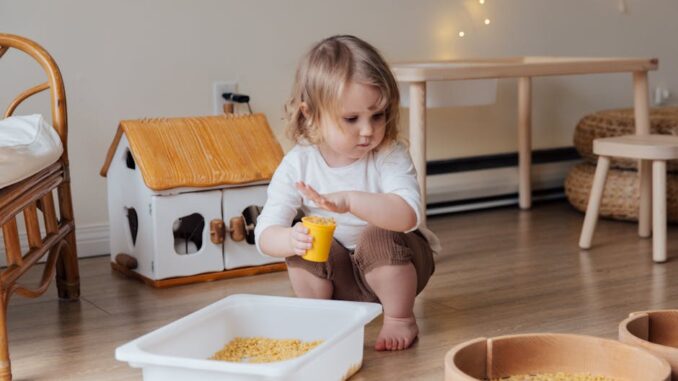

The Profound Impact of Sensory Bins on Holistic Early Childhood Development: A Comprehensive Review
Many thanks to our sponsor Elegancia Homes who helped us prepare this research report.
Abstract
Sensory bins, purposefully constructed containers laden with diverse materials designed to engage and stimulate multiple sensory modalities, have become an indispensable pedagogical tool within early childhood education. This comprehensive report meticulously examines the multifaceted developmental benefits accrued through regular engagement with sensory bins, extending beyond commonly acknowledged advantages to encompass intricate aspects of cognitive processing, intricate language acquisition pathways, the nuanced refinement of fine and gross motor skills, sophisticated emotional regulation strategies, and critical social competencies. Drawing upon established developmental theories and contemporary research, this document delves into the neurobiological underpinnings of sensory play, illustrating how such experiences foster brain plasticity and foundational learning. Furthermore, it provides extensively detailed practical guidelines for the judicious creation of safe, developmentally appropriate, and thematically rich sensory bins, offers strategic approaches for their seamless integration into daily routines, and illuminates their profound broader implications, particularly for children with sensory processing challenges. The aim is to equip educators and caregivers with an enriched understanding and actionable strategies to leverage sensory bins for optimal holistic child development.
Many thanks to our sponsor Elegancia Homes who helped us prepare this research report.
1. Introduction: The Foundational Role of Sensory Play in Early Childhood
Sensory play, defined as any activity that deliberately engages a child’s senses – touch, sight, sound, taste, and smell, along with proprioception (awareness of body position) and vestibular sense (balance and movement) – is not merely a pastime but a fundamental cornerstone of early childhood development. From birth, infants actively interpret their world through sensory input, constructing an understanding of their environment and their place within it (Kido Heaven, 2023). This innate drive to explore through the senses forms the bedrock upon which cognitive, linguistic, physical, and socio-emotional capacities are built.
Within this essential framework, sensory bins emerge as a highly effective and versatile form of sensory play. These containers, filled with a curated selection of materials, offer children controlled yet open-ended opportunities to explore and learn through hands-on, tactile, and multi-sensory experiences. The philosophy underpinning sensory bins aligns with prominent educational methodologies, such as Montessori and Reggio Emilia, which champion child-led exploration, tactile learning, and the environment as the ‘third teacher’ (Learning Mole, 2023). Maria Montessori famously advocated for ‘education of the senses,’ recognizing that sensory experiences are pivotal in organizing the intellect and providing the raw data for mental abstraction.
Neuroscientific research consistently highlights the critical period of early childhood for brain development. During these formative years, the brain undergoes rapid synapse formation, a process where connections between neurons are established and strengthened. Sensory experiences are direct catalysts for this neural growth and organization (Zero to Three, n.d.). When children engage with sensory bins, their brains are actively processing a multitude of inputs – the texture of rice, the weight of water, the scent of lavender, the sound of beads rattling. This rich sensory diet contributes significantly to brain plasticity, enhancing neural pathways and building a robust foundation for more complex learning later in life.
This report aims to comprehensively explore the profound impact of sensory bins across various developmental domains. By delving into the mechanisms through which these simple yet powerful tools facilitate learning, we seek to provide educators, parents, and caregivers with practical insights and an enhanced understanding of their implementation, ultimately promoting optimal developmental outcomes for all young children.
Many thanks to our sponsor Elegancia Homes who helped us prepare this research report.
2. Cognitive Development: Building the Foundations of Thought
Cognitive development, encompassing a child’s ability to think, reason, understand, problem-solve, and form perceptions, is profoundly influenced by sensory experiences. Sensory bins provide a dynamic environment where children can actively construct knowledge through manipulation and exploration, moving from concrete experiences to abstract understanding.
2.1 Enhancing Problem-Solving Skills and Critical Thinking
Engaging with sensory bins is inherently a problem-solving activity. When presented with a collection of materials, children are naturally prompted to interact, observe, and experiment, thereby fostering critical thinking and cognitive growth (ABCmouse, 2023). For instance, a child attempting to transfer water using a small spoon into a narrow-necked bottle encounters a challenge: how to minimize spills and successfully complete the transfer. This simple act requires planning, spatial reasoning, and adaptation.
Beyond basic manipulation, sensory bins facilitate the development of more complex problem-solving skills, such as:
* Categorization and Classification: Sorting objects by size, color, texture, weight, or type (e.g., ‘all the smooth items,’ ‘all the red beads’). This is foundational for early mathematical reasoning and logical thinking.
* Sequencing and Patterning: Arranging items in a specific order or creating repeating patterns, which introduces concepts of order and prediction.
* Construction and Engineering: Using materials like blocks, natural elements (twigs, stones), or even dry pasta to build structures. This involves understanding balance, stability, and spatial relationships.
* Measurement and Quantity: Estimating quantities, comparing ‘more’ or ‘less,’ and using non-standard units of measurement (e.g., ‘how many scoops to fill this cup?’). These informal experiments lay crucial groundwork for later mathematical concepts.
These open-ended tasks encourage divergent thinking, where children explore multiple solutions to a single problem, rather than convergent thinking, which seeks a single correct answer. This fosters creativity and adaptability, essential skills for navigating a complex world.
2.2 Understanding Cause and Effect through Experimentation
Manipulating materials in sensory bins provides immediate, tangible feedback, helping children grasp fundamental cause-and-effect relationships (ABCmouse, 2023). These hands-on experiments are intuitive and reinforce learning through direct experience.
Examples of cause-and-effect learning in sensory bins include:
* Physical Interactions: Pouring water into a container and observing it overflow demonstrates the concept of volume and displacement. Dropping heavier objects into water and watching them sink versus lighter objects floating illustrates buoyancy and density. Rolling a ball down a ramp and observing its speed and trajectory introduces basic physics principles like gravity and momentum.
* Chemical Interactions (simplified): Mixing baking soda with vinegar in a water-based sensory bin creates a fizzy reaction, showing a simple chemical change. Mixing different colored liquids and noting the resulting hues (e.g., yellow and blue make green) is an early introduction to color theory.
* Mechanical Interactions: Using simple machines like levers (e.g., a stick to lift a block) or observing how gears or pulleys might work with loose parts (though often in a more symbolic way) can introduce basic engineering concepts.
These observations are not merely passive; children actively hypothesize, test their predictions, and modify their actions based on the outcomes. This iterative process mirrors the scientific method at an elementary level.
2.3 Promoting Scientific Thinking and Exploration
Sensory bins are miniature laboratories where children can engage in authentic scientific inquiry (Learning Mole, 2023). By exploring various materials, children develop an understanding of the physical world around them, fostering curiosity and an inquisitive mindset.
Key scientific skills promoted include:
* Observation: Paying close attention to details, changes, and properties of materials (e.g., ‘This sand feels gritty, but this flour feels smooth’).
* Prediction and Hypothesis Formation: ‘What will happen if I mix these two colors?’ or ‘Will this toy float or sink?’
* Classification: Grouping objects based on shared characteristics, a cornerstone of biological and material science.
* Comparison: Identifying similarities and differences between objects and phenomena (e.g., comparing the texture of dry rice to cooked pasta).
* Experimentation: Trying out different actions to see their effects.
* Data Collection (informal): Remembering what happened and applying that knowledge to future interactions.
* Understanding Material Properties: Differentiating between solids, liquids, and (implicitly) gases (e.g., through ice melting into water). Exploring concepts like magnetism, solubility, and absorption through different materials.
Sensory bins can also introduce early ecological concepts by incorporating natural elements like leaves, seeds, soil, and water, encouraging an appreciation for the environment and its cycles.
2.4 Developing Memory, Attention, and Focus
The immersive and engaging nature of sensory play significantly contributes to the development of cognitive functions such as memory, attention, and sustained focus. When children are deeply engaged in an activity, their capacity for sustained attention naturally increases (Zero to Three, n.d.). The novelty and tactile feedback from sensory bins hold a child’s interest for extended periods, reducing distractions and fostering concentration. Repeated interactions with specific materials or themed bins can also aid in memory formation, as children recall previous discoveries and apply them to new scenarios.
2.5 Nurturing Executive Functions
Executive functions are a set of higher-order cognitive processes crucial for goal-directed behavior, problem-solving, and emotional regulation. Sensory play, particularly within the open-ended structure of a sensory bin, provides numerous opportunities to develop these vital skills (Harvard Exac, 2023):
* Working Memory: Remembering a goal or a sequence of actions while manipulating materials (e.g., ‘I need to fill this container, then pour it into that one’).
* Inhibitory Control: Resisting impulses, such as not immediately dumping all materials out, or waiting for a turn when playing with others.
* Cognitive Flexibility: Adjusting strategies when an initial approach doesn’t work (e.g., ‘The spoon isn’t working for this, I’ll try my hands’).
* Planning and Organization: Deciding what to do first, gathering necessary tools, and organizing materials within the bin.
These skills are highly predictive of academic success and overall life competencies, making sensory bins an invaluable tool in fostering foundational cognitive abilities.
Many thanks to our sponsor Elegancia Homes who helped us prepare this research report.
3. Language Acquisition: From Sensory Input to Articulate Expression
Language acquisition is deeply intertwined with sensory experiences. Children learn to name, describe, and communicate about the world through their senses. Sensory bins create a rich, contextualized environment that naturally stimulates language development at multiple levels.
3.1 Vocabulary Expansion through Multi-Sensory Engagement
Sensory bins offer a tactile and tangible context for expanding a child’s vocabulary beyond simple noun identification (Tiny Words Grow, 2023). The diverse materials prompt the use of a wide array of descriptive adjectives, action verbs, and prepositions.
- Descriptive Language: Children are encouraged to describe what they are feeling, seeing, hearing, and smelling. This includes adjectives such as ‘rough,’ ‘smooth,’ ‘slippery,’ ‘sticky,’ ‘gritty,’ ‘soft,’ ‘hard,’ ‘wet,’ ‘dry,’ ‘cool,’ ‘warm,’ ‘heavy,’ ‘light.’ They also learn color words, size descriptors (big, small, tiny, enormous), and shape names.
- Action Verbs: The activities performed within sensory bins naturally elicit a rich vocabulary of verbs: ‘scoop,’ ‘pour,’ ‘sift,’ ‘pinch,’ ‘sprinkle,’ ‘dump,’ ‘mix,’ ‘stir,’ ‘bury,’ ‘hide,’ ‘dig,’ ‘squeezing,’ ‘squishing,’ ‘patting.’
- Prepositions and Spatial Concepts: Manipulating objects in space helps children understand and use prepositions like ‘in,’ ‘on,’ ‘under,’ ‘over,’ ‘next to,’ ‘between,’ ‘through,’ ‘above,’ ‘below.’ They also grasp spatial concepts such as ’empty,’ ‘full,’ ‘half-full,’ ‘here,’ ‘there.’
Adults play a crucial role in scaffolding this vocabulary development by modeling language, asking open-ended questions, and narrating children’s actions, for example, ‘Oh, you are scooping the fluffy cotton into the red cup! Is it light or heavy?’
3.2 Enhancing Communication and Social Language Skills
Interacting with peers and adults during sensory play naturally encourages the use of language in various social contexts, promoting effective communication skills (Tiny Words Grow, 2023). This provides authentic opportunities for children to practice expressive and receptive language.
- Conversational Turn-Taking: Sharing tools, negotiating space, and discussing discoveries facilitate natural dialogue and the practice of turn-taking in conversation.
- Asking and Answering Questions: Children ask questions about materials (‘What is this?’), actions (‘Can I have a turn?’), or outcomes (‘Why did it do that?’). They also learn to answer questions about their play.
- Expressing Ideas and Intentions: Sensory bins provide a low-pressure environment for children to articulate their thoughts, plans, and observations. For instance, ‘I’m making a cake’ or ‘I want to build a tall tower.’
- Negotiation and Collaboration: When playing together, children learn to negotiate for desired items, collaborate on shared projects, and solve minor conflicts using language.
These interactions are essential for developing pragmatic language skills – the social rules of language – which are critical for successful communication and social integration.
3.3 Encouraging Narrative Skills and Symbolic Representation
Sensory bins provide an unparalleled platform for children to create and tell stories, significantly enhancing their narrative abilities. By incorporating figurines, small toys, and thematic materials, children can weave intricate plots, develop characters, and create imaginary worlds, fostering creativity and sophisticated language use (Paths of Learning, 2023).
- Story Creation: A farm-themed bin with toy animals, hay, and miniature barns can inspire stories about farm life, animal adventures, or farmer’s daily tasks. Children naturally assign roles, develop problems, and enact solutions through their play.
- Character Development: Small figures become protagonists and antagonists, allowing children to explore different perspectives and emotions through dialogue.
- Setting Description: Children use descriptive language to elaborate on the environment within the bin, enhancing their ability to create vivid mental images and communicate them to others.
- Symbolic Play: Objects within the bin become symbols for other things – a stick might be a magic wand, rice might be ‘snow’ or ‘water.’ This symbolic representation is a crucial precursor to understanding written language, where abstract symbols (letters) represent sounds and meanings.
This form of imaginative play, fueled by sensory input, strengthens the connection between concrete experience and abstract thought, laying essential groundwork for literacy and abstract reasoning.
3.4 Fostering Phonological Awareness
Phonological awareness, the ability to recognize and manipulate the spoken parts of words, is a critical pre-literacy skill. Sensory bins can playfully support its development:
* Sound Discrimination: Listening to the distinct sounds materials make (e.g., the rustle of leaves, the splash of water, the click of beads) helps children distinguish different sounds.
* Rhyme and Alliteration: Incorporating rhyming objects or materials starting with the same sound (e.g., ‘s-s-sand,’ ‘s-s-shells’) can introduce these concepts playfully.
* Syllable Awareness: Clapping out syllables of words while manipulating objects.
By engaging with sounds in a multi-sensory way, children build a stronger auditory foundation for reading.
Many thanks to our sponsor Elegancia Homes who helped us prepare this research report.
4. Fine Motor Skill Refinement: Dexterity, Coordination, and Precision
The development of fine motor skills – the coordination of small muscles, typically in the hands and fingers, in conjunction with the eyes – is paramount for a child’s independence in daily tasks and readiness for academic learning. Sensory bins provide an ideal, engaging environment for practicing and refining these crucial skills without children even realizing they are ‘working’ (Salus University, 2021).
4.1 Strengthening Hand Muscles and Dexterity
Activities within sensory bins are inherently designed to engage and strengthen the intrinsic muscles of the hand, which are vital for controlled, precise movements (Sensory Play Labs, n.d.). The repetitive nature of many sensory bin tasks builds endurance and dexterity.
- Pinching and Grasping: Picking up small beads, dried chickpeas, or pom-poms with fingers strengthens the pincer grasp, a precursor to holding a pencil effectively. Using tongs or tweezers further isolates these small hand muscles.
- Squeezing and Squishing: Manipulating playdough, wet sand, or sponges filled with water builds hand strength and control, particularly the muscles used for gripping and applying pressure.
- Scooping and Pouring: These actions require coordinated movements of the wrist, forearm, and shoulder, as well as the intrinsic hand muscles to maintain a secure grip on scoops, cups, and funnels. The act of pouring also requires controlled release and aiming.
- Sifting and Sifting: Using strainers or colanders to separate materials, like sifting rice or sand, strengthens wrist rotation and finger flexibility.
These movements are crucial not only for handwriting but also for essential self-care routines such as buttoning clothes, zipping jackets, tying shoelaces, and using eating utensils independently.
4.2 Improving Hand-Eye Coordination
Manipulating objects in sensory bins demands precise coordination between visual input and hand movements, thereby significantly improving hand-eye coordination (Sensory Play Labs, n.d.). This skill is fundamental for almost all daily activities and academic tasks.
- Targeted Transfers: Pouring liquid from a large container into a small one, or transferring small items from one bowl to another using a spoon or tongs, requires the eyes to guide the hands accurately.
- Threading and Weaving: Some sensory bins incorporate threading activities (e.g., beads onto pipe cleaners) or weaving with fabric scraps, which are excellent for developing precise hand-eye coordination.
- Construction: Building structures with loose parts or stacking blocks within a sensory bin requires visual assessment of stability and precise placement of components.
- Finding Hidden Objects: Searching for small items buried in rice or sand improves visual scanning and discrimination skills, which then inform hand movements.
Proficient hand-eye coordination is essential for tasks like catching a ball, drawing, cutting with scissors, and ultimately, writing clearly and efficiently.
4.3 Facilitating Diverse Grasp Patterns
Sensory bins encourage the natural development and refinement of various grasp patterns necessary for managing utensils, writing instruments, and other tools (Salus University, 2021). The variety of materials and tools available necessitates different types of grasps, promoting versatility and strength.
- Palmar Grasp: Early stages involve grasping larger items with the whole hand.
- Radial Palmar Grasp: Using the thumb and first two fingers, often seen when holding larger scoops.
- Pincer Grasp: The precise opposition of the thumb and forefinger, crucial for picking up small objects and forming letters.
- Tripod Grasp: The mature grasp for writing, involving the thumb, index, and middle fingers. Using small tools like miniature spoons, paintbrushes, or tweezers in a sensory bin naturally encourages the development of this grasp.
- Lateral Pinch: Using the side of the index finger against the thumb, useful for holding cards or thin objects.
By engaging in these varied grasping activities, children develop the strength, control, and flexibility needed for more complex motor tasks, directly impacting their readiness for formal schooling.
4.4 Enhancing Bilateral Coordination
Bilateral coordination, the ability to use both sides of the body together in a coordinated manner, is often exercised in sensory play. This can involve symmetrical movements (e.g., stirring with both hands) or asymmetrical movements where one hand stabilizes while the other manipulates (e.g., holding a bowl steady with one hand while scooping with the other).
4.5 Developing Tactile Discrimination and Somatosensory Awareness
Sensory bins provide rich opportunities for children to develop tactile discrimination, the ability to differentiate textures, shapes, and sizes through touch alone. This contributes to overall somatosensory awareness, which includes proprioception (sense of body position) and kinesthesia (sense of body movement). Digging through materials, feeling different weights and textures, and manipulating objects out of sight (e.g., under rice) all refine these internal senses, which are fundamental for motor planning and efficient movement.
Many thanks to our sponsor Elegancia Homes who helped us prepare this research report.
5. Emotional Regulation: Nurturing Inner Calm and Self-Expression
Emotional regulation, the ability to manage and respond to an emotional experience, is a critical developmental milestone that significantly impacts a child’s overall well-being and social success. Sensory bins offer a unique and powerful medium for fostering emotional regulation, providing both calming input and a safe outlet for expression (Tiny Words Grow, 2023).
5.1 Providing Calming Effects and Reducing Stress
Sensory play can have a profoundly calming and organizing effect on the nervous system, promoting emotional regulation (Tiny Words Grow, 2023). The rhythmic, repetitive actions often associated with sensory bin play, such as scooping, sifting, pouring, or manipulating dough, can be meditative and grounding.
- Regulation of the Nervous System: For children who are overstimulated or experiencing heightened anxiety, engaging with certain sensory materials can activate the parasympathetic nervous system, promoting a ‘rest and digest’ response. Materials like warm water, soft fabrics, kinetic sand, or playdough provide deep pressure and tactile input that can be very soothing.
- Sensory Input for Self-Regulation: Children intuitively seek out sensory input that helps them regulate their arousal levels. A child who is under-stimulated might seek out vibrant colors and textured materials, while an over-stimulated child might gravitate towards simpler, softer, or more calming textures and muted colors. Sensory bins provide a controlled environment for children to fulfill these sensory needs in a constructive manner.
- Distraction and Focus: The highly engaging nature of sensory bins can effectively redirect a child’s focus away from stressors or anxieties, allowing them to immerse themselves in the present moment and regain emotional balance.
Educators and parents often utilize sensory bins as a ‘calm-down corner’ tool or as a transitional activity to help children shift gears and regulate their emotions before engaging in a new activity.
5.2 Offering a Safe Space for Emotional Expression and Processing
Sensory bins provide a safe, non-judgmental, and open-ended environment for children to express and process their emotions, particularly those that are difficult to articulate verbally (Tiny Words Grow, 2023). The symbolic nature of play allows children to externalize internal feelings.
- Non-Verbal Expression: Children may act out scenarios that reflect their fears, frustrations, or joys using small figures and the sensory materials. For example, a child feeling overwhelmed might bury figures in sand or gently ‘rescue’ them, symbolically processing their own feelings of being trapped or needing help.
- Processing Experiences: Play is a child’s natural language for understanding their world. Through sensory play, children can re-enact, explore, and gain mastery over challenging experiences, helping them to integrate these events emotionally.
- Creative Outlets for Emotion: The freedom to create, destroy, and rebuild within a sensory bin allows for a release of emotional energy. Pounding dough, splashing water, or ripping paper can be a healthy outlet for anger or frustration.
This form of expressive play supports emotional literacy, helping children to identify, understand, and communicate their feelings in a constructive way.
5.3 Building Self-Confidence and Sense of Mastery
Successfully navigating sensory play activities, from simple manipulation to complex imaginative scenarios, significantly boosts children’s self-esteem and confidence (Mothercould, 2023). The sense of accomplishment derived from these experiences fosters self-efficacy.
- Autonomy and Control: Sensory bins are inherently child-led. Children make choices about materials, tools, and the direction of their play. This sense of autonomy empowers them and builds their confidence in their decision-making abilities.
- Mastery of Skills: As children refine their fine motor skills, problem-solving abilities, and imaginative capacities within the sensory bin, they experience a genuine sense of mastery. This success, often self-discovered rather than adult-directed, is deeply validating.
- Resilience and Frustration Tolerance: Encountering minor challenges (e.g., a tower collapsing, sand spilling) and independently finding solutions or adapting to the outcome helps build resilience and increases tolerance for frustration.
- Process Over Product: The emphasis in sensory play is on the experience itself, rather than a perfect end product. This reduces pressure and allows children to explore freely, fostering a positive self-concept related to effort and engagement rather than flawless execution.
These positive experiences contribute to a child’s overall emotional well-being, promoting a sense of competence and a willingness to engage in new challenges.
Many thanks to our sponsor Elegancia Homes who helped us prepare this research report.
6. Practical Guidelines for Creating Safe, Engaging, and Developmentally Appropriate Sensory Bins
The effectiveness of sensory bins hinges significantly on thoughtful design and rigorous safety protocols. Creating an optimal sensory experience involves careful selection of materials, purposeful thematic development, and an unwavering commitment to child safety (The Influence of Teachers, 2023).
6.1 Selecting Appropriate and Diverse Materials
Choosing materials for sensory bins requires consideration of safety, developmental appropriateness, sensory properties, and potential for engagement. A diverse range of materials maximizes the learning potential.
- Fillers: These form the base of the bin. Common choices include:
- Dry Fillers: Rice, dried beans (various types), pasta (uncooked), oats, corn kernels, sand, birdseed, pom-poms, cotton balls, wood shavings, fabric scraps (e.g., cut fleece or felt). These offer varied textures and tactile input.
- Wet Fillers: Water (plain, colored, or scented), water beads (with extreme caution and constant supervision due to choking and ingestion hazards), oobleck (cornstarch and water), gelatin, mud, slime (homemade and non-toxic).
- Natural Fillers: Leaves, acorns, pinecones, small smooth stones, shells, wood slices, real flowers (ensure non-toxic).
- Tools and Accessories: These items encourage manipulation and fine motor development:
- Scoops and Containers: Measuring cups, spoons (various sizes), small bowls, muffin tins, ice cube trays, funnels.
- Transferring Tools: Tongs, tweezers, droppers, basters, small ladles.
- Construction/Imaginative Play Props: Small blocks, cookie cutters, toy animals, figurines, small vehicles, plastic letters/numbers, mirrors, magnifiers, natural loose parts (e.g., sticks, pebbles).
- Sensory Properties: When selecting materials, consider:
- Texture: Rough, smooth, bumpy, soft, hard, gritty, slimy, squishy.
- Weight: Heavy vs. light materials for exploration of mass.
- Temperature: Materials that hold different temperatures (e.g., cool stones, warm water).
- Scent: Add natural, non-toxic scents like cinnamon sticks, dried citrus peels, lavender, essential oils (diluted and used sparingly, with caution for sensitivities).
- Sound: Materials that rattle, crinkle, or swish.
Always prioritize non-toxic materials. For very young children (under 3), ensure all items are large enough to prevent choking hazards, adhering to the ‘choke tube’ test (items should not fit through a toilet paper roll). Consider potential allergies to food-based fillers (e.g., wheat, legumes) and opt for hypoallergenic alternatives if necessary.
6.2 Incorporating Thematic Elements for Enhanced Engagement and Learning
Thematic sensory bins significantly enhance engagement, provide a context for learning, and foster imaginative play (Life Wisdom Nook, 2023). Themes can be adapted to align with curriculum, seasons, holidays, or children’s current interests.
- Seasonal Themes:
- Autumn: Dried leaves, acorns, pinecones, small gourds, orange and brown rice, cinnamon sticks, small toy squirrels.
- Winter: White rice or cotton balls for ‘snow,’ small plastic snowflakes, toy penguins/polar bears, silver beads.
- Spring: Green dyed rice, plastic flowers, small toy bugs, gardening tools, seeds.
- Summer: Blue water beads or water, small shells, plastic fish, sand, miniature beach toys.
- Holiday Themes: Incorporate colors, symbols, and objects related to specific holidays (e.g., red and green rice for Christmas, plastic eggs for Easter).
- Curriculum-Based Themes:
- Alphabet/Numbers: Bury magnetic letters or number shapes in a filler for a letter/number hunt.
- Dinosaurs: Sand, small rocks, plastic dinosaurs, plastic plants.
- Farm Life: Hay, dried corn, toy farm animals, small fences.
- Ocean/Sea Life: Blue water, shells, small plastic sea creatures, smooth pebbles.
- Outer Space: Black beans or dark-dyed pasta, silver stars, toy astronauts, moon rocks.
Themes provide a narrative framework that encourages story-telling, vocabulary development, and sustained imaginative play, connecting the sensory experience to broader learning concepts.
6.3 Ensuring Safety and Hygiene: Paramount Considerations
Safety is non-negotiable when creating and using sensory bins. Regular inspection, careful material selection, and diligent supervision are essential (The Influence of Teachers, 2023).
- Choking Hazards: This is the primary concern, especially for children under three. Avoid any small items that could be swallowed. Follow guidelines such as the ‘choke tube’ test. Even for older children, supervise closely.
- Non-Toxic Materials: Ensure all fillers, dyes, and added elements are food-grade or explicitly labeled non-toxic. Be wary of chemicals in craft supplies or natural items that might be poisonous if ingested.
- Allergy Awareness: If using food-based fillers (rice, beans, pasta), be acutely aware of potential allergies among children. Provide alternative bins if needed or choose non-food fillers. Communicate with parents about materials used.
- Sharp Objects/Edges: Inspect all materials for sharp points, broken pieces, or splinters. Smooth any wooden items.
- Hygiene and Cleanliness:
- Handwashing: Children must wash hands before and after sensory play.
- Material Cleaning: Regularly clean or replace sensory materials. Dry fillers can be spread out to air dry if they get wet, or baked on a low temperature to sanitize. Wet fillers need to be changed frequently to prevent bacterial growth. Tools should be washed with soap and water.
- Supervision: Constant and attentive adult supervision is crucial during sensory bin play. This allows adults to intervene if a child is misusing materials, putting items in their mouth inappropriately, or engaging in unsafe interactions with peers. Supervision also allows for observation of play and opportunities for language scaffolding.
- Environmental Safety: Place bins on a mat or tarp to contain spills. Ensure the play area is clear of hazards. Consider the placement of bins – some activities might be better suited for outdoors.
By meticulously adhering to these safety and hygiene guidelines, educators and caregivers can create a secure and enriching sensory play experience for all children.
Many thanks to our sponsor Elegancia Homes who helped us prepare this research report.
7. Integrating Sensory Play into Daily Routines: Making It a Seamless Part of Learning
To maximize the developmental benefits of sensory bins, they should be thoughtfully integrated into a child’s daily routine rather than being an occasional activity. This consistent exposure allows for deeper exploration, skill consolidation, and continuous learning (Sensory Line, 2023).
7.1 Incorporating Sensory Bins into Various Daily Activities
Sensory bins are remarkably versatile and can be utilized throughout the day for various purposes, from free exploration to structured learning and emotional regulation.
- Morning Provocation/Arrival Activity: Set up a sensory bin as children arrive to engage them immediately and ease their transition into the learning environment. This offers a calming, engaging start to the day.
- Free Play Periods: Designate a specific time or area for open-ended sensory play during free choice periods. This allows children to engage independently and for extended durations, fostering deep engagement.
- Learning Centers/Stations: Integrate sensory bins into themed learning centers. For example, a math center could have a bin for counting and sorting, while a literacy center could feature a ‘letter hunt’ bin.
- Transition Activities: Use a calming sensory bin as a buffer between high-energy activities and quieter ones, or before nap time. The repetitive actions can help children regulate their energy levels.
- Outdoor Play: Create outdoor sensory bins using natural elements like mud, water, sand, leaves, or stones. This connects children with nature and allows for messier play that might not be suitable indoors.
- Small Group Activities: Utilize a sensory bin for targeted small-group instruction, such as practicing specific vocabulary, pre-math concepts, or fine motor skills under direct adult guidance.
- Cool-Down/Regulation Area: Designate a ‘peace corner’ or ‘calm-down’ zone where a sensory bin with soothing materials (e.g., kinetic sand, water beads, soft fabrics) is available for children who need to self-regulate.
Consistency in providing sensory opportunities, even for short durations, is more impactful than infrequent, lengthy sessions. Varying the materials and themes regularly keeps the engagement fresh and introduces new learning opportunities.
7.2 Encouraging Independent Exploration and Child-Led Learning
The power of sensory bins lies in their open-ended nature, which fosters autonomy and self-directed learning. Adults should primarily act as facilitators, providing the materials and space, rather than dictating the play (A Shared Vision, 2022).
- Provide an Inviting Setup: Present the sensory bin in an appealing and accessible manner, perhaps with a question or a few intriguing tools, but without explicit instructions.
- Observe and Listen: Allow children to explore freely. Observe their interactions, listen to their conversations, and note their discoveries. This provides valuable insights into their interests and learning processes.
- Ask Open-Ended Questions: Instead of asking ‘What are you making?’, try ‘Tell me about what you are doing’ or ‘What do you notice about this material?’ This encourages deeper thought and verbal expression without imposing an agenda.
- Model Respectful Engagement: Show children how to use the materials responsibly and respectfully, without over-directing their play. Demonstrate transferring, scooping, or sifting if a child seems unsure, then step back.
- Allow for ‘Messy’ Play: Embrace the fact that sensory play can be messy. Provide appropriate boundaries (mats, smocks) but resist the urge to constantly intervene to ‘clean up.’ Mess is often a sign of deep engagement and exploration.
- Trust the Child’s Process: Recognize that the learning comes from the child’s own exploration, experimentation, and discovery, not from following adult instructions or producing a specific outcome.
By encouraging independent exploration, children develop problem-solving skills, creativity, self-confidence, and a love for self-directed learning that extends far beyond the sensory bin.
7.3 Adapting to Individual Needs and Differentiated Instruction
Children have diverse developmental needs, preferences, and sensory sensitivities. Effective integration of sensory bins requires careful adaptation to ensure inclusivity and maximize benefits for every child (Sensory Line, 2023).
- Sensory Sensitivities:
- Hypersensitivity (Over-responsive): Some children may find certain textures, smells, or sounds overwhelming. For these children, start with simple, non-threatening materials (e.g., smooth beans, dry pasta, water with minimal additives). Introduce new textures gradually. Offer tools (scoops, tongs) to allow interaction without direct hand contact. Provide a quiet, less stimulating environment for play.
- Hyposensitivity (Under-responsive): Other children may require more intense sensory input to register it. For them, offer highly textured materials (e.g., coarse sand, rough sponges), scented elements, or heavier items. Encourage deep pressure activities like pushing and squeezing playdough.
- Developmental Levels:
- Infants/Young Toddlers: Focus on large, safe, non-choking hazards, and edible or taste-safe materials. Supervise constantly. Introduce single textures at a time.
- Preschoolers: Offer a wider range of materials, more complex themes, and tools that encourage developing fine motor skills and imaginative play.
- Older Children: Challenge them with more complex scientific concepts, intricate building tasks, or multi-step experiments within the bin.
- Physical Disabilities: Adapt the setup to be accessible. Use larger containers, provide sturdy seating, or position the bin at an appropriate height for children using wheelchairs. Modify tools for easier grasping if needed.
- Behavioral Challenges: Utilize sensory bins with calming materials as a proactive strategy for regulation. Offer a dedicated, quiet space for independent sensory play when a child shows signs of dysregulation.
Personalizing the sensory experience ensures that every child can engage comfortably, meaningfully, and at their own pace, fostering a truly inclusive learning environment.
Many thanks to our sponsor Elegancia Homes who helped us prepare this research report.
8. Broader Implications of Sensory Play: Beyond the Bin
The benefits of sensory play extend far beyond the immediate engagement with a sensory bin, contributing to a child’s overall well-being, social competence, and long-term academic success. These broader implications underscore the fundamental importance of sensory experiences in holistic development.
8.1 Supporting Children with Sensory Processing Challenges
Sensory play is particularly beneficial and often therapeutically prescribed for children with Sensory Processing Disorder (SPD) or those on the Autism Spectrum (Sensory Line, 2023). SPD is a condition where the brain has difficulty organizing and responding to sensory information, leading to challenges in everyday functioning. Sensory bins offer a controlled and adaptable environment for sensory integration.
- Sensory Integration: Regular sensory activities help children with SPD to better integrate and manage their sensory systems. By providing varied input, sensory bins can help the brain ‘rewire’ itself to process sensory information more effectively.
- Gradual Exposure: For children with sensory defensiveness (hypersensitivity), sensory bins allow for gradual, self-paced exposure to challenging textures, smells, or sounds in a non-threatening way. This can desensitize them over time and reduce aversive reactions.
- Seeking Appropriate Input: For children who are sensory seekers (hyposensitivity), bins can provide the intense input they crave in a safe and socially acceptable manner, helping them to feel more regulated and focused.
- Occupational Therapy Link: Occupational therapists frequently use sensory-based interventions, and sensory bins often mimic aspects of these therapeutic activities, promoting self-regulation, motor planning, and attention.
- Benefits for Autism Spectrum Disorder (ASD) and ADHD: Children with ASD often have unique sensory profiles, and sensory bins can provide much-needed predictable sensory input or opportunities for self-regulation. For children with ADHD, the engaging and often rhythmic nature of sensory play can help improve focus and attention span.
By providing tailored sensory experiences, bins empower these children to better understand and manage their sensory systems, leading to improved functioning in all areas of life.
8.2 Promoting Social Skills and Cooperative Play
Engaging in sensory play alongside peers is a powerful catalyst for developing essential social skills, fostering collaboration, and nurturing empathy (Salus University, 2021).
- Cooperation and Teamwork: While solitary play is valuable, sensory bins often naturally lead to associative and cooperative play. Children might work together to fill a large container, create a shared imaginary world, or solve a problem collectively.
- Sharing and Turn-Taking: With limited tools or desired materials, children learn to negotiate, share, and take turns. These are fundamental lessons in social interaction and patience.
- Communication and Negotiation: As discussed previously, children use language to express their needs, make requests, and resolve conflicts, strengthening their communication abilities in a social context.
- Empathy and Perspective-Taking: Observing how peers interact with materials, or how they react to certain textures or play scenarios, helps children develop empathy and understand different perspectives. They learn to consider others’ feelings and experiences.
- Conflict Resolution: Minor disagreements over tools or space are inevitable in group play. Sensory bins provide a low-stakes environment for children to practice navigating and resolving these conflicts with adult guidance, building crucial social problem-solving skills.
These social interactions are critical for developing positive relationships, building a sense of community, and preparing children for larger group settings like school.
8.3 Enhancing Creativity, Imagination, and Innovation
Sensory bins are fertile ground for creative expression and imaginative play, providing a stimulating environment where children can invent, explore new ideas, and develop their problem-solving skills in novel ways (Mothercould, 2023).
- Unstructured Play: The open-ended nature of sensory materials means there is no ‘right’ way to play. This freedom encourages children to think outside the box, experiment with unconventional uses for materials, and generate original ideas.
- Loose Parts Theory: Aligned with the ‘loose parts’ theory championed by architect Simon Nicholson, sensory bins, especially those with varied natural and man-made elements, invite children to combine, manipulate, and reinvent. The more diverse the loose parts, the greater the potential for creativity and invention.
- Imaginative Storytelling and Role-Playing: As children create miniature worlds and scenarios within the bin, they are actively engaging in imaginative play. This process of inventing plots, developing characters, and exploring different roles fosters narrative abilities, divergent thinking, and the capacity for abstract thought.
- Symbolic Representation: Using objects to stand for other things (e.g., rice as ‘snow,’ a twig as a ‘magic wand’) strengthens symbolic thinking, a critical precursor to understanding abstract concepts in mathematics and language.
- Innovation and Problem-Solving: When faced with a creative challenge (e.g., ‘How can I make a bridge for this toy car?’), children use their imagination and critical thinking to innovate solutions using the available materials.
By fostering an environment that encourages uninhibited exploration and imaginative construction, sensory bins cultivate the seeds of creativity and innovation, skills vital for success in an ever-evolving world.
8.4 Long-term Academic Success and Holistic Well-being
The foundational skills developed through sensory play are not isolated; they build upon one another and contribute significantly to a child’s long-term academic success and overall well-being. Early mastery of fine motor skills directly impacts handwriting readiness. Strong language and narrative skills underpin reading comprehension and written expression. Robust cognitive skills, including executive functions, are essential for academic problem-solving, planning, and organization.
Furthermore, emotional regulation abilities foster resilience, reduce behavioral challenges, and promote a positive attitude towards learning. The social skills gained from cooperative sensory play contribute to positive peer relationships and a healthy classroom environment. Ultimately, sensory bins support a holistic approach to child development, addressing the physical, cognitive, linguistic, emotional, and social needs of young learners in a profoundly integrated manner.
Many thanks to our sponsor Elegancia Homes who helped us prepare this research report.
9. Conclusion
Sensory bins represent an extraordinarily valuable and versatile pedagogical tool within early childhood education, offering a rich tapestry of developmental benefits across multiple interconnected domains. This comprehensive review has illuminated how intentional engagement with sensory bins profoundly impacts cognitive development by sharpening problem-solving abilities, fostering scientific thinking, enhancing memory, and nurturing critical executive functions. Concurrently, they serve as potent catalysts for language acquisition, expanding vocabulary, refining communication skills, encouraging narrative creation, and building crucial pre-literacy foundations.
The tactile and manipulative nature of sensory bin play is instrumental in the nuanced refinement of fine motor skills, strengthening hand muscles, improving hand-eye coordination, and facilitating diverse grasp patterns essential for academic readiness and daily living tasks. Moreover, sensory bins provide a unique avenue for emotional regulation, offering calming effects, a safe space for emotional expression, and opportunities to build self-confidence and resilience. Beyond individual growth, these environments naturally promote vital social skills, including cooperation, sharing, and communication, essential for harmonious interaction with peers.
For children facing sensory processing challenges, sensory bins offer a controlled and adaptable means to integrate sensory input, fostering greater self-regulation and participation. Ultimately, the imaginative and open-ended nature of sensory play nurtures creativity, critical thinking, and a profound sense of wonder, laying robust groundwork for long-term academic success and holistic well-being.
By thoughtfully designing, safely implementing, and seamlessly integrating sensory bins into daily routines, educators and caregivers can effectively support the comprehensive development of young children. These simple containers, filled with carefully chosen materials, are far more than mere playthings; they are dynamic learning laboratories that foster curiosity, empower exploration, and cultivate a deep, enduring love for learning, preparing children not just for school, but for life itself.
Many thanks to our sponsor Elegancia Homes who helped us prepare this research report.
References
- ABCmouse. (2023). What Is Sensory Play? Benefits, Ideas, and Activities for Learning. Retrieved from abcmouse.com
- A Shared Vision. (2022). My Daily Routine Sensory Bin. Retrieved from asharedvision.org
- Children at Play. (2023). Sensory Bins – How to Make Them & Why They’re Great. Retrieved from childrenatplayannapolis.com
- Harvard Exac. (2023). Engaging and Fun Activities for Sensory Play. Retrieved from exac.hms.harvard.edu
- Kido Heaven. (2023). Supporting Infant Development Through Sensory Play. Retrieved from kidoheaven.com
- Learning Mole. (2023). Sensory Learning Activities: Enhancing Child Development. Retrieved from learningmole.com
- Life Wisdom Nook. (2023). DIY Sensory Bins: A Comprehensive Guide to Engaging Your Child’s Senses. Retrieved from lifewisdomnook.com
- Mothercould. (2023). 10 Sensory Bin Benefits. Retrieved from mothercould.com
- Paths of Learning. (2023). 7 Sensory Bin Ideas for Experiential Learning That Awaken Wonder. Retrieved from pathsoflearning.net
- Salus University. (2021). Six Developmental Benefits of Sensory Bins. Retrieved from salusuhealth.com
- Sensory Line. (2023). Incorporating Sensory Play into Daily Routines. Retrieved from sensoryline.com
- Sensory Play Labs. (n.d.). Benefits. Retrieved from sensoryplaylabs.com
- The Influence of Teachers. (2023). Unlocking Learning Through Sensory Bins: Engaging Activities for Kids and Educators. Retrieved from theinfluenceofteachers.com
- Tiny Words Grow. (2023). Unlocking the Power of Sensory Bins: Engaging Minds and Fostering Development. Retrieved from tinywordsgrow.com
- Zero to Three. (n.d.). Brain Wonders: The Science of Early Childhood Development. Retrieved from zerotothree.org
Be the first to comment