

Mastering the Art of Entertainment: Integrating a TV Seamlessly into Your Compact Lounge
Let’s be real, a small living room can feel like a design puzzle. You want that big screen for movie nights or catching up on your favourite series, but you definitely don’t want it to swallow your precious square footage. It’s a common dilemma, one many of us face in modern apartments or cozier homes. But don’t despair! Integrating a TV into a compact lounge doesn’t have to mean compromising on style or functionality. With the right strategies, you can transform your limited space into a comfortable, sophisticated entertainment hub. I’ve seen countless colleagues and clients wrestle with this, and I’m here to tell you, it’s absolutely doable.
Here are 15 professional, battle-tested tips to help you seamlessly fit a screen into your small living room, making it feel expansive and inviting, not cramped.
1. Wall Mounting: Your First Line of Defense Against Clutter
If you ask me, wall mounting your TV is pretty much a non-negotiable for smaller spaces. Think about it: that clunky TV stand or media console is taking up valuable floor real estate. By getting your screen up on the wall, you’re instantly creating a cleaner, more open environment. It’s not just about saving space; there’s something incredibly sleek and modern about a TV that appears to float effortlessly against a wall.
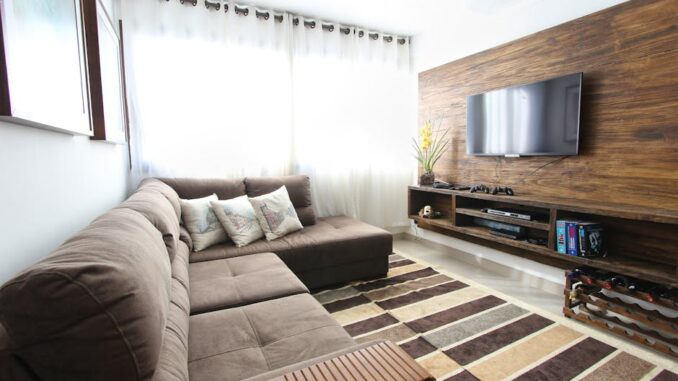
Creating a stunning setting for home entertaining.
Choosing the right mount is crucial, mind you. You’ve got fixed mounts, which are great if your viewing angle is straightforward, offering the slimmest profile. Then there are tilt mounts, perfect if you need to reduce glare from windows or if the TV is mounted a little higher than eye-level. But my personal favourite, especially for versatility in compact rooms, is a full-motion or articulating mount. These allow you to pull the TV out, swivel it, and tilt it in almost any direction, ensuring an optimal view from anywhere in the room. Imagine being able to angle the screen towards the kitchen while you’re cooking, or turning it for an impromptu gaming session with friends. It’s a game-changer, truly.
Now, let’s talk cables. Nothing ruins a minimalist aesthetic faster than a tangled spaghetti monster of wires dangling beneath your sleek, wall-mounted screen. You’ve got a couple of options here. The most professional look involves routing cables inside the wall. This requires a bit of DIY confidence or, frankly, calling in an electrician or AV specialist. They’ll install conduits that keep everything hidden, creating that truly wireless look. If in-wall isn’t an option, perhaps due to rental restrictions or wall type, then a good quality cable management trunking or even a simple fabric cable sleeve can work wonders. Keep it colour-matched to your wall, and it’ll practically disappear. I once helped a client, a young professional just starting out, completely overhaul their tiny studio apartment by simply wall-mounting their TV and concealing the cables. They couldn’t believe how much larger their living area felt, and they finally had space for that cozy reading armchair they’d always wanted.
When it comes to height, aim for the centre of the screen to be at eye level when you’re seated. For most sofas, this typically translates to about 42-48 inches from the floor, but it really depends on your specific seating. You can always do a quick test: sit on your sofa, close your eyes, then open them. Where do your eyes naturally land? That’s your sweet spot. Always measure twice, drill once, as the old saying goes.
2. Corner Power Play: Utilizing Often-Forgotten Spaces
Corners in small living rooms are often overlooked, treated as dead zones or relegated to housing a lonely plant. But they’re actually prime TV territory, particularly if your room has an awkward layout or limited wall space. Tucking your TV neatly into a corner with a dedicated corner TV stand or even a custom floating corner shelf instantly opens up the rest of the room. It leverages an area that might otherwise go unused, drawing the eye to a natural focal point without blocking traffic flow or making the room feel narrower.
Corner stands come in various styles, from traditional enclosed cabinets that hide components to open, minimalist designs. When choosing one, consider the depth and how far it protrudes into the room. The goal is to integrate, not dominate. You could even go a step further by installing floating shelves above the TV in the corner, creating a mini-media centre. These shelves aren’t just for decoration; they’re perfect for holding a soundbar, a small set-top box, or even a couple of your favourite books, making the entire setup feel intentional and pulled together. This approach truly maximizes vertical space, giving you storage and display options without eating up precious floor area. It’s all about making every inch work hard for you, isn’t it?
3. The Slim Stand: Where Less Truly Is More
If wall-mounting isn’t an option – maybe you’re in a rental, or your walls just aren’t suited for it – then choosing a sleek, slim TV stand becomes paramount. We’re talking about depth here; every inch matters. A stand with minimal depth means it won’t jut out too far into your already compact living space. It’s about finding something that feels almost invisible, blending seamlessly into your decor rather than shouting ‘I’m a big piece of furniture holding your TV!’.
Look for minimalist designs crafted from materials like glass, slender metal, or light-coloured wood. These materials often have a less imposing visual presence. Avoid bulky, heavy-looking consoles, even if they offer ample storage, if that storage comes at the cost of consuming too much floor space. The key is to keep the entire area feeling light and airy, not weighed down. A clean, uncluttered TV stand helps achieve that. Also, ensure your stand is proportional to your TV; you don’t want a tiny stand struggling to hold a large screen, nor an oversized stand dwarfing a smaller TV. My design philosophy often leans towards ‘less is more,’ and with a slim stand, you really embody that principle. It allows your room to breathe, and honestly, it looks incredibly chic too.
4. Multi-Functional Furniture: The Swiss Army Knife of Small Spaces
In a small space, every single piece of furniture needs to earn its keep. It’s like a job interview for your ottoman – can it just be a footrest, or can it also hold blankets and serve as extra seating when guests arrive? This is where multi-functional furniture truly shines. It’s not just about having a TV; it’s about the entire ecosystem around it.
Think beyond the obvious. A media console that integrates bookshelves on either side or even behind a sliding panel is genius. Your coffee table could have hidden compartments for remotes or lift up to become a dining surface. Storage ottomans are fantastic for stashing away clutter like magazines, charging cables, or throws, while doubling as extra seating when you’re entertaining. Even a sofa bed offers the ultimate in multi-functionality, transforming your living room into a guest room when needed. The trick is to choose pieces that don’t just look like they have multiple functions but perform them beautifully and effortlessly. You want seamless transitions, not clunky transformations. Why have a piece that only does one thing when it could do two, or even three, beautifully and efficiently? It’s about optimizing every single square foot of your home, after all.
5. The Great Reveal: Concealing Your TV When Not in Use
Some of us prefer a living space that feels more like a serene sanctuary than a permanent entertainment centre. If the idea of your big black rectangle dominating the room when you’re not watching it doesn’t appeal, then concealing your TV is an elegant solution. It allows you to transform your living room into a more design-forward space, revealing the screen only when you’re ready to dive into a movie or catch the news.
There are several clever ways to do this. Custom built-in cabinetry can house your TV behind bi-fold doors, sliding panels, or even within a cabinet that lowers the TV out of sight. Imagine a beautiful, bespoke unit that looks like a curated display of books and art, only to open up and reveal your screen! Another popular trend involves integrating the TV into a gallery wall. You can frame your TV with other framed artworks, making it just another piece in the collection when it’s off. There are even innovative solutions where the TV itself mimics a piece of art, displaying a chosen image when in standby mode, or those fantastic mirrored cabinets that completely hide the screen behind a reflective surface. I’m always captivated by the moment someone sees a hidden TV for the first time – that ‘aha!’ moment of surprise and delight. It’s a fantastic way to maintain a polished aesthetic while still enjoying all the modern conveniences.
6. Above the Hearth: A Classic Focal Point with a Modern Twist
Placing your TV above a fireplace is a classic space-saving manoeuvre in homes where the fireplace is already the natural focal point. It immediately brings the TV into the main gathering area without requiring a separate wall. It’s a particularly smart move in small living rooms where wall space is at a premium and you want to avoid cluttering multiple walls.
However, this isn’t without its considerations. Ergonomics can be an issue if the TV is mounted too high, forcing you to crane your neck. Always aim for comfortable viewing. Heat is another significant factor; prolonged exposure to heat from a working fireplace isn’t good for electronics. A substantial mantelpiece can help deflect some of the heat upwards and away from the TV, and it’s always wise to ensure good ventilation. If your fireplace is primarily decorative, then these concerns are, of course, lessened. For cable management, a professional installation can hide wires behind the wall and through the chimney breast if safe and permissible. It creates a seamless look, transforming your fireplace into a contemporary media hub. Just remember that time my friend’s soundbar warped because they didn’t account for the heat? Definitely something to learn from!
7. Floating Shelves: Beyond Just Holding the TV
While we touched on floating shelves for corner spaces, they deserve their own spotlight because their versatility is immense in small living rooms. Wall-mounted floating shelves, particularly at an angle or as corner units, add visual interest without consuming precious floor space. They’re like little architectural elements that defy gravity, offering both functionality and aesthetic appeal. Think of them as building blocks for your media setup.
You can use a single sturdy floating shelf as a minimalist platform for your TV, especially if you’ve opted not to wall-mount it directly. But their true power lies in creating an entire media wall. Above or beside your TV, these shelves can hold soundbars, game consoles, decorative items, or a few carefully chosen books. They help to ‘frame’ the TV, making it feel integrated into the room’s design rather than just an appliance. When selecting shelves, consider materials that match your room’s aesthetic – natural wood for warmth, glass for an airy feel, or sleek metal for an industrial touch. Remember to route any necessary cables discreetly, either through in-wall conduits if the shelves are fixed, or by securing them to the underside of the shelf itself. The clean lines and open feel of floating shelves can genuinely make a compact room feel lighter and more spacious, truly. It’s a simple change that packs a powerful design punch.
8. The Discreet Reveal: Wall-Mounted TV Lift Cabinets
For those who want the ultimate in discreet TV integration, a wall-mounted TV lift cabinet is a dream come true. This isn’t just about hiding your TV; it’s about a sophisticated, motorised mechanism that elegantly raises your television into view when you’re ready to watch, then lowers it back out of sight when you’re done. It’s like having a secret agent for your entertainment.
Unlike traditional lift cabinets that stand on the floor, wall-mounted versions save even more space, as they’re often built directly into custom cabinetry or a feature wall. Imagine a beautiful panelled wall, perhaps with some built-in shelving, that, with the press of a button, reveals your screen. The quiet hum of the motor as your TV gracefully rises into position adds a touch of luxury and technological prowess to your living room. These systems are perfect for maintaining a seamless, uncluttered aesthetic, especially if you’re a minimalist at heart or want your living room to serve multiple functions beyond just TV watching. While they represent a larger investment than a simple wall mount, the ‘wow’ factor and the functional benefits in a small space are undeniably compelling.
9. Mirror Magic: Expanding Your Perceived Space
This isn’t directly about the TV, but it’s a crucial design secret for small spaces: mirrors. Strategically placed mirrors are masters of illusion, visually doubling the size of your room. They reflect light, making a space brighter, and they reflect the room itself, creating the perception of greater depth and openness. It’s like adding an extra window where there isn’t one.
When it comes to your TV setup, positioning a large mirror on an adjacent wall or even opposite the TV can have a profound effect. It bounces light around, making the entire area feel more expansive. If you have a clean, minimalist TV setup, the mirror will reflect that, reinforcing the sense of order and space. Avoid placing a mirror directly opposite the TV if it’s prone to glare, but an angled placement can work wonders. Framed mirrors can add a decorative element, while large, frameless mirrors can create an almost seamless continuation of the wall, truly tricking the eye. It’s a surprisingly simple yet incredibly effective design technique that interior designers have been using for decades, and for good reason.
10. The Power of Simplicity: Embracing Minimalism
In a small living room, clutter is your arch-nemesis. It eats up visual space, makes a room feel chaotic, and suffocates any sense of openness. This is why keeping things simple, a philosophy rooted in minimalism, is so critical. Think of it as a cleanse for your living area. Scandinavian and Nordic styles, for instance, are brilliant inspirations here, focusing on clean lines, natural materials, functional design, and a pared-back aesthetic.
When integrating your TV, this means avoiding excessive decorative items around the screen. Don’t crowd your media console with a dozen trinkets. Instead, choose one or two meaningful pieces. Opt for simple furniture designs, light colours on your walls, and allow ample ‘negative space’ – areas that are intentionally left empty. This allows the eye to rest and prevents the room from feeling visually overwhelmed. A simple, uncluttered space around your TV ensures that the screen, when in use, is the clear focal point, and when off, it blends more harmoniously into a tranquil environment. A truly minimalist space doesn’t just look good; it feels incredibly calming and surprisingly luxurious, allowing the essential elements to shine without competition.
11. Cinematic Grandeur, Compact Footprint: Projectors and Pull-Down Screens
If you truly want a massive screen experience without having a permanent large black rectangle on your wall, a projector and pull-down screen is an unparalleled solution for small living rooms. It’s the ultimate ‘disappearing act’ for your entertainment. Imagine watching movies on a screen that literally spans your entire wall, then having it vanish with the flick of a switch or the pull of a cord.
A ceiling-mounted projector or even a short-throw projector placed on a sleek shelf near the wall can cast a huge, vibrant image onto a blank wall or, even better, a retractable screen. These screens can be manually pulled down like a roller blind, or motorised for effortless remote-controlled deployment. When not in use, the screen retracts completely, leaving your wall space clear and allowing the room to feel open and versatile. This frees up enormous floor and wall space that a large TV stand or even a wall-mounted TV would otherwise occupy. Of course, you’ll need to consider ambient light – a dark room will always yield the best projector experience – but modern projectors are surprisingly capable even with some light. The magic of having a truly cinematic experience that disappears entirely when the credits roll is something you really have to experience to fully appreciate. It’s perfect for transforming a multi-functional room into a dedicated home cinema at a moment’s notice.
12. Angled Furniture: Reshaping Perception and Flow
This might sound counter-intuitive, but sometimes positioning your furniture at a slight angle, rather than rigid straight lines, can make a small room feel significantly more expansive and dynamic. Think about it: a room filled with furniture pushed against every wall can feel like a box. Introducing angles breaks up those linear perceptions.
By arranging your main seating, like a sofa or a couple of armchairs, on a slight diagonal relative to the TV, you can create a more inviting and less restrictive layout. This not only encourages better flow through the room but also defines distinct zones within a compact open-plan space. You might use a modular sofa that can be configured into an L-shape and angled into a corner, creating a cozy nook for TV viewing. The empty space behind angled furniture isn’t wasted either; it’s perfect for a floating corner shelf or a slender side table, cleverly filling the void without adding bulk. It’s a clever way to manipulate sightlines and make the room feel less confined, offering an unexpected sense of movement and depth.
13. Curtains as a Frame: Enhancing Visual Interest
When we think of curtains, we usually think of windows, don’t we? But they can be a surprisingly effective design tool to frame your television and add a touch of elegance and visual height to a small living room. Imagine using floor-to-ceiling curtains on either side of your wall-mounted or centrally placed TV. This creates a soft, theatrical frame, drawing the eye directly to your entertainment hub.
The key is to keep them minimal and elegant – think simple, flowing drapes in a neutral or complementary colour. Installing the curtain rod close to the ceiling (or even all the way up to the ceiling) helps to draw the eye upwards, creating the illusion of greater ceiling height, which is invaluable in a compact space. When pulled back, they reveal your TV viewing spot, and when drawn, they can soften the entire wall, potentially even camouflaging the TV when it’s off, especially if the curtains are a solid, darker colour. It adds texture, a touch of softness, and a sense of architectural grandeur that can really elevate the space around your screen.
14. The Corner TV Stand Revisited: A Lifesaver for Tricky Layouts
Yes, we’ve talked about corners before, but let’s really hone in on the specific solution of a corner TV stand as a standalone point. This isn’t just about utilizing a neglected area; it’s about providing a tailor-made solution for rooms with challenging layouts where a straight wall might not exist or is already taken by a window or doorway. A corner TV stand can be a veritable lifesaver, allowing you to establish a clear focal point without disrupting the room’s flow or sacrificing valuable straight wall space.
These stands are designed to fit snugly into a 90-degree angle, often with a cut-out back for easy cable access. They come in various styles – from open shelving designs that keep components visible but neatly organised, to closed cabinets that offer hidden storage for all your media paraphernalia. The trick is to choose one that isn’t overly bulky, one that complements your existing furniture, and crucially, one that leaves enough space around it so it doesn’t feel crammed. Remember, a corner stand effectively anchors your TV in a discreet, non-intrusive way, making it an excellent choice for truly tight spots. It’s all about making clever choices that work with your room, not against it.
15. The Green Touch: Incorporating Plants for Life and Balance
Finally, let’s talk about bringing a little bit of life into your small living room, especially around your entertainment zone. Incorporating plants might not seem like a direct TV integration tip, but it’s a vital element for softening the harsh lines of electronics and adding a much-needed organic touch to compact spaces. Small plants can add a burst of colour and a breath of fresh air without taking up much-needed space.
Think about snake plants (Sansevieria), which are incredibly low maintenance and grow vertically, or a trailing pothos that can elegantly cascade from a floating shelf above your TV. Succulents, with their architectural shapes, are perfect for minimalists and don’t need much attention. Place a small potted plant on a corner TV stand, a few small air plants nestled on a floating shelf, or even a slender floor plant beside a wall-mounted TV. Not only do they add visual appeal and a calming natural element, but some plants are also known to improve air quality, which is always a bonus. They help to balance the technology in the room with something natural and alive, making the whole space feel more inviting, more breathable, and ultimately, more homely.
Bringing It All Together
Integrating a TV into a compact lounge doesn’t have to be a battle. It’s about being strategic, thinking creatively, and making smart choices that prioritize both functionality and aesthetics. Whether you’re wall-mounting it, tucking it into a corner, hiding it away, or even projecting your entertainment, the goal remains the same: enjoy your favourite shows and movies without sacrificing the comfort and style of your living space. The key, always, is to balance what you want with what your space allows, ensuring your TV complements your room beautifully rather than dominating it.
Remember, your small living room has incredible potential. With these tips, you’re not just fitting a TV; you’re crafting an experience. And that, in my book, is a win-win situation.
Wall mounting, huh? So, when are we getting self-adhesive TVs that stick like giant Post-it notes? Imagine the design possibilities (and the potential for redecorating disasters!).
Haha, I love the Post-it note TV idea! The redecorating disasters would definitely be something else. But imagine the possibilities for renters! No more holes in the walls! Maybe that’s the next big innovation in TV tech? Let’s hope so!
Editor: ElegantHome.News
Thank you to our Sponsor Elegancia Homes
I appreciate the emphasis on multi-functional furniture. Integrating storage within media consoles or ottomans seems crucial for maintaining a clutter-free environment in smaller lounges. Has anyone experimented with unconventional storage solutions around their entertainment area?
Great point! Multi-functional pieces truly maximize space. It’s amazing how clever storage solutions, like ottomans with built-in trays or coffee tables with hidden compartments, can transform a small living room. I’m curious, has anyone tried using vertical storage solutions like wall-mounted baskets for media accessories?
Editor: ElegantHome.News
Thank you to our Sponsor Elegancia Homes
Projectors, eh? Finally, a way to make my cat’s shadow puppets a legitimate entertainment option on a 100-inch screen. Anyone else think this could revolutionize amateur dramatics?
That’s hilarious! I hadn’t considered the potential for shadow puppet theatre, but you’re right, a projector opens up a whole new world of creative possibilities. I can just imagine the avant-garde cat productions! This might even inspire a new wave of home-based immersive art experiences!
Editor: ElegantHome.News
Thank you to our Sponsor Elegancia Homes
The discussion of angled furniture is intriguing. Repositioning key pieces could also subtly improve acoustics in the room, especially when paired with strategic placement of soft furnishings to absorb sound.
That’s a fantastic point about the acoustics! I hadn’t fully considered that benefit of angling furniture. Combining that with the right soft furnishings could really create an immersive viewing experience, even in a smaller space. Thanks for adding that layer to the discussion!
Editor: ElegantHome.News
Thank you to our Sponsor Elegancia Homes
Concealing the TV? I’m picturing a James Bond-esque setup. Press a button, a bookcase rotates, and boom – Netflix. Now, how do we automate the popcorn machine with that same button? Asking for a friend… who *really* loves movies.
That’s a hilarious vision! I love the James Bond idea. Integrating the popcorn machine is the next level of home automation. Maybe a sensor detects when the movie starts and initiates the popping sequence? We’re just an engineer away from peak cinematic laziness. I can already see the headlines!
Editor: ElegantHome.News
Thank you to our Sponsor Elegancia Homes
The point about balancing wants with what a space allows is so true. Considering a smaller, high-quality TV might offer a better overall aesthetic and leave room for other design elements to shine. Has anyone downsized their screen for a more balanced living space?
Absolutely! I’m glad you highlighted that point. It’s easy to get caught up in screen size, but a well-chosen, smaller TV can actually enhance a room. It can give other design elements room to breathe and make the overall space feel more cohesive and stylish. Has anyone else found this to be true?
Editor: ElegantHome.News
Thank you to our Sponsor Elegancia Homes
The idea of using curtains to frame the TV is interesting. Using blackout curtains could serve the dual purpose of enhancing the viewing experience by reducing glare, creating a mini home theater effect.
That’s a great point about the blackout curtains! Creating that mini home theater effect is key for an immersive experience. Have you found that darker curtains also help to absorb sound, further enhancing the viewing experience? I would love to know your experience!
Editor: ElegantHome.News
Thank you to our Sponsor Elegancia Homes
Regarding concealing the TV with artwork, what are the key considerations for selecting art that complements both the room’s design and effectively hides the screen’s presence when not in use?
That’s a great question! When using art to conceal a TV, scale and style are key. Consider artwork that’s visually substantial enough to distract from the TV’s shape. Also, think about the artwork’s colour palette, ensure it complements, and blends with, your overall room decor! What art styles have you considered?
Editor: ElegantHome.News
Thank you to our Sponsor Elegancia Homes
Regarding concealing the TV, have you found gallery walls to be more effective with abstract or representational art? Does the choice significantly impact the success of disguising the screen?
That’s an interesting question. I’ve noticed abstract art tends to blend more seamlessly with the TV screen. However, a strong representational piece can be equally effective if its colours and composition closely match the surrounding décor, drawing the eye away from the screen and toward the artwork itself. What art do you have?
Editor: ElegantHome.News
Thank you to our Sponsor Elegancia Homes
The green touch sounds lovely, but I’m now imagining my cat mistaking the strategically placed plants for a personal salad bar. Any tips on keeping our leafy friends safe from overzealous pets while still maintaining that organic balance?
That’s a great point about our furry friends! Consider hanging planters or shelves that are out of reach. Also, some plants are safer than others. Catnip, for example, can be irresistible, while others are toxic. A little research can help you choose pet-friendly greenery for a stylish and safe space. Have you considered any particular plants?
Editor: ElegantHome.News
Thank you to our Sponsor Elegancia Homes